
Looking After Your Bones During Menopause: A Dietitian's Guide
When people think about menopause, symptoms such as hot flushes, sleep disturbances and mood changes often come to mind. Bone health? Not so much. Yet menopause is one of the most significant stages of life for bone health. As oestrogen levels decline, bones lose density more rapidly, increasing the risk of osteopenia and osteoporosis. The good news is that there is a lot we can do to support our bones during this transition.
At Complete Dietetics, we often work with women who are surprised to learn how much nutrition and movement can influence bone health. While every person's experience is different, here are some examples of the types of conversations we commonly have in clinic.
By Emma Gore | Accredited Practising Dietitian | ANZAED Credentialed Eating Disorder Clinician Complete Dietetics — Geelong & Melbourne. Contribution credit to Deakin University Student Dietitian Jaymee Williams.
Why Does Menopause Affect Bone Health?
It’s worth noting that bone changes don’t begin at menopause, they often start during perimenopause, the transition period that can begin years before periods stop. This makes perimenopause an important window to build bone-supporting habits, before the most rapid phase of bone density loss begins.
Throughout our lives, our bones are constantly being broken down and rebuilt. Oestrogen plays an important role in protecting bone density by slowing the rate of bone breakdown. During menopause, declining oestrogen levels mean that bone can be broken down more quickly than it is rebuilt. Over time, this may contribute to reduced bone density and increase the risk of osteoporosis. Osteoporosis is a condition where bones become weaker and more fragile, increasing the likelihood of fractures. Often referred to as a "silent condition", many people are unaware of changes in their bone density until a scan is performed or a fracture occurs. While this can sound concerning, menopause also presents an opportunity to focus on habits that support long-term bone health.

Case Reflection: Supporting Bone Health After a Diagnosis of Osteopenia
A woman in her late 50s attended the clinic following a recent diagnosis of osteopenia after a routine bone density scan. She was feeling overwhelmed by conflicting nutrition advice online and was unsure whether she was meeting her nutritional requirements to support bone health. During her nutrition assessment, several opportunities were identified:
Protein intake was inconsistent across the day
Calcium-rich foods were not regularly included
Breakfast was often skipped
Strength-based exercise had reduced over time
Together, we focused on practical and sustainable strategies to:
Include a source of quality protein at each meal
Increase calcium-rich foods across the week
Build a balanced breakfast routine
Support her return to strength-based exercise alongside her physiotherapist
This approach reflects an important principle we discuss regularly at Complete Dietetics: supporting bone health doesn't require perfection- small and consistent habits are where meaningful changes happen!
Three Key Nutrients for Bone Health
Protein: Not Just for Muscles
Protein is often associated with building muscle, but it is also important for maintaining healthy bones. Protein provides the building blocks required to maintain bone structure and supports the ongoing repair and maintenance of both muscle and bone tissue. During menopause, maintaining adequate protein intake becomes particularly important because muscle mass and strength naturally decline with age.
This process, known as sarcopenia, can affect balance, mobility and independence. The Australian Recommended Dietary Intake (RDI) for protein is 0.75g per kilogram of body weight per day for women aged 19–70, and 0.94g per kilogram per day for women over 70. However, emerging research suggests that aiming for 1.0–1.2g per kilogram per day may better support muscle and bone health during menopause and beyond.
For example, a woman weighing 70kg may benefit from around 70–84g of protein daily. Good sources of protein include:
Eggs
Fish and seafood
Chicken and lean meats
Milk, yoghurt and cheese
Tofu and tempeh
Lentils, chickpeas and beans
Nuts and seeds
A practical goal is to include a source of protein at each meal and snack. Examples might include:
Greek yoghurt with fruit
Eggs on toast
Tuna in a sandwich
Cheese and crackers
Tofu in a stir-fry
Salmon with vegetables
Calcium: The Building Blocks of Bones
Calcium is one of the key minerals that gives our bones strength and structure. If we do not consume enough calcium through food, the body will draw calcium from the bones to maintain normal blood calcium levels. Over time, this may contribute to reduced bone density. Calcium requirements increase during and after menopause. The Australian Recommended Dietary Intake (RDI) is 1000mg per day for women aged 19–50, rising to 1300mg per day for women over 50. If we don’t consume enough calcium through food, the body will draw calcium from the bones to maintain normal blood levels, which over time contributes to reduced bone density.
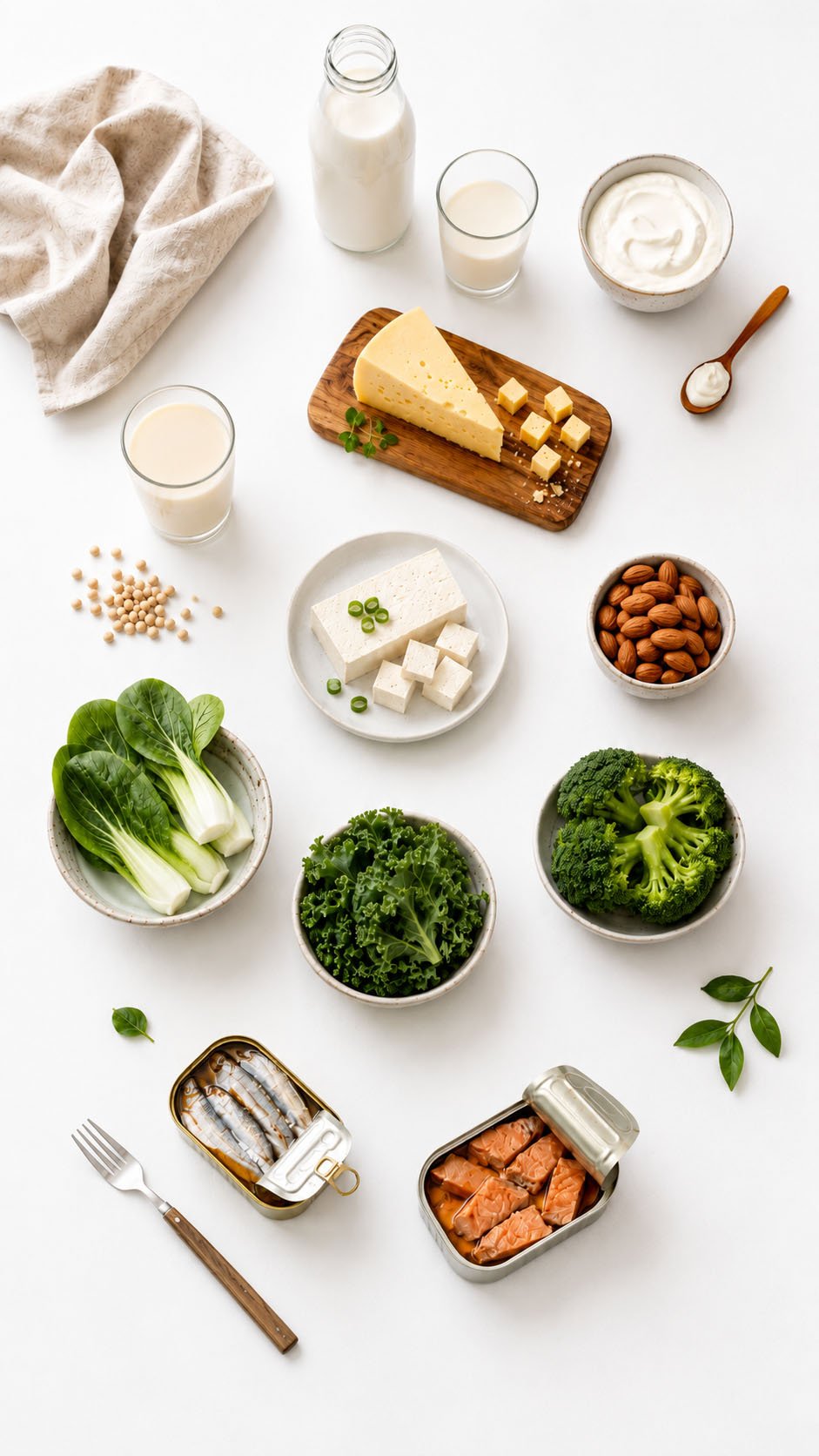
Some calcium-rich foods include:
Milk
Yoghurt
Cheese
Calcium-fortified soy milk
Calcium-set tofu
Canned salmon and sardines
Bok choy
Kale
Broccoli
Almonds
Practical ways to increase calcium intake include:
Adding milk or fortified soy milk to coffee and cereal
Choosing yoghurt as a snack
Adding cheese to sandwiches and salads
Including canned salmon or sardines at lunch
Using calcium-set tofu in meals
Remember, it is the overall pattern of eating across weeks and months that matters most.
Vitamin D: Helping Your Body Use Calcium
Vitamin D helps the body absorb and utilise calcium effectively. In Australia, sunlight remains our primary source of vitamin D. There are some food sources including:
Salmon
Sardines
Trout
Egg yolks
Fortified dairy products
Fortified plant milks
If you are concerned about your vitamin D levels, speak with your GP. A simple blood test can help determine whether supplementation may be appropriate.
Case Reflection: Supporting Bone Health on a Plant-Based Diet
〰️
Case Reflection: Supporting Bone Health on a Plant-Based Diet 〰️
Another common concern we see in clinic is whether it is possible to meet calcium requirements without dairy foods.
For example, a client following a long-term vegan diet attended the clinic after learning she had osteopenia. She was concerned that avoiding dairy products meant she was unable to meet her calcium needs.
Together, we identified opportunities to include:
Calcium-fortified soy milk
Calcium-set tofu
Tahini
Almonds
More calcium-rich vegetables
This highlights another important aspect of nutrition care during menopause: there is rarely one right way to eat to optimise bone density.
Nutrition recommendations should always be personalised to your preferences, cultural background, lifestyle and values.
A Note on Body Changes During Menopause
Menopause can be a time when people become more aware of changes in their body.
It is important to remember that bodies naturally change throughout the lifespan, and health cannot be determined by body size alone.
Many people notice changes in how their body feels and functions during menopause. Energy levels, strength, recovery from exercise, appetite, sleep and body composition may all shift as hormone levels change. While these changes can sometimes feel unfamiliar or challenging, they are a normal part of the menopausal transition.
At Complete Dietetics, we encourage people to focus less on changing their body and more on supporting it. Rather than pursuing restrictive diets, consider what your body needs to feel nourished and supported. Adequate nutrition, enjoyable movement, restorative sleep and stress management all play important roles in supporting wellbeing throughout menopause.
Movement Matters Too!
Nutrition is only one piece of the puzzle.
Regular strength-based exercise is one of the most effective ways to support bone health during and after menopause.
Examples include:
Resistance training
Walking
Stair climbing
Dancing
Tennis
Pilates
Strength classes
The goal is not perfection.
The goal is finding movement that feels enjoyable, achievable and sustainable.
Many women find that working with a physiotherapist helps them build confidence and develop an exercise plan that is appropriate for their individual needs.
What Does Supporting Bone Health Look Like in Everyday Life?
When people think about bone health, they often imagine dramatic lifestyle changes are required.
In reality, supporting your bones often comes back to a few simple foundations:
✓ Including protein regularly throughout the day
✓ Meeting your calcium requirements where possible
✓ Supporting vitamin D levels
✓ Participating in regular strength-based movement
✓ Focusing on consistency rather than perfection
These habits may seem simple, but over time they can play an important role in supporting healthy ageing.
When Should You See a Dietitian?
A dietitian can help if you:
Have been diagnosed with osteopenia or osteoporosis
Are unsure whether you are meeting your protein or calcium needs
Follow a vegetarian or vegan diet
Avoid dairy foods
Feel overwhelmed by conflicting nutrition information
Want support navigating menopause through a weight-inclusive lens

Our Expert Team
Tess Henderson is an Accredited Practising Dietitian with experience supporting clients with chronic health conditions, including through vegetarian and vegan diets. Tess helps women navigating the nutritional changes that come with healthy ageing, with a focus on sustainable everyday eating habits.
Isabelle Hum is an Accredited Practising Dietitian and Accredited Sports Dietitian with a particular specialty in women's health, including perimenopause and menopause. Isabelle also specialises in osteoporosis and osteopenia, working with women to build and maintain bone strength through practical, sustainable nutrition strategies.
Paige Burke is an Accredited Practising Dietitian with a background in supporting clients with diabetes, heart health, and malnutrition. Paige works with women to address the metabolic shifts that accompany menopause, helping them protect their long-term health through targeted nutrition support
Together, our team offers compassionate, evidence-based support to help women navigate the nutritional changes that come with midlife, with confidence and clarity.


Frequently asked questions
-
Women over 50yrs need 1300mg of calcium per day, up from 1000mg for younger women. This increased requirement reflects the accelerated bone loss that occurs after menopause due to falling oestrogen levels. Food sources are always preferable to supplements, as calcium from food is better absorbed and carries fewer risks.
-
You can slow further bone loss and, in some cases, modestly improve density, but significant rebuilding is difficult once bone has been lost. This is why prevention matters. Adequate calcium, vitamin D, protein, and regular weight-bearing exercise are most effective when started early in perimenopause, before loss accelerates.
-
Dairy foods (milk, yoghurt, cheese) are the most concentrated sources of calcium, but non-dairy options include canned fish with bones, tofu made with calcium sulphate, fortified plant milks, almonds, and leafy greens like bok choy and kale. Protein from meat, legumes, eggs, and dairy also plays a key role in maintaining bone structure.
-
Osteopenia means bone density is lower than normal but not low enough to be classified as osteoporosis. Think of it as a warning sign, bone loss has begun, but there is still a window to intervene with diet, exercise, and lifestyle changes before the condition progresses.
FAQs - Complete Dietetics
-
At Complete Dietetics, our Accredited Practising Dietitians specialise in six core areas of nutrition. See our full list of services and find the area that best fits your needs.
-
You do not need a GP referral to book with us. During registration, we’ll ask for details of any doctors or specialists involved in your care so we can coordinate with your healthcare team (with your permission). For your first appointment, please bring or forward any relevant information, such as past medical history, test/scans results, current medications.
-
Yes. Our Accredited Practising Dietitians provide secure telehealth dietitian consultations via video across all Australian states and territories. Enjoy the same personalised, evidence-based care from the comfort of your home—no referral needed.
-
We have two Clinics
Geelong - 85 McKillop Street, Geelong VIC 3220.
Melbourne - 478 Kooyong Road, Caulfield South, VIC 3162
Hours vary by location. -
Yes, we provide home visits for NDIS participants who will benefit most from our specialised care, including tube-fed clients and those with MS or neurological conditions. Currently, we offer home visits in the Geelong region and Inner South East Suburbs of Melbourne, within a 30-minute travel distance. Please check with reception to see if you/your participant fall within our home visit locations.